


Hot or Cold Foil? – That is the Question.
With the variety of manufacturing options available to add eye catching effects, one of the most talked about is the difference between hot foil and cold foil.

Cold Foil
During the cold foil process, a UV-curable adhesive is printed on the substrate in the shape of the design that is to be foiled. The foil is then pressed onto the material and is stripped away where no adhesive was printed. After a quick run under the UV light, the product is finished.
Cold foil runs fast on press and precise registration is able to be achieved. It is available in a wide variety of patterns and colors, and no tooling is required for the process. Cold foil can be overprinted easily and may be utilized on heat sensitive materials. Cold foil is not a replacement for hot stamp, but rather another option for foiling on a package.
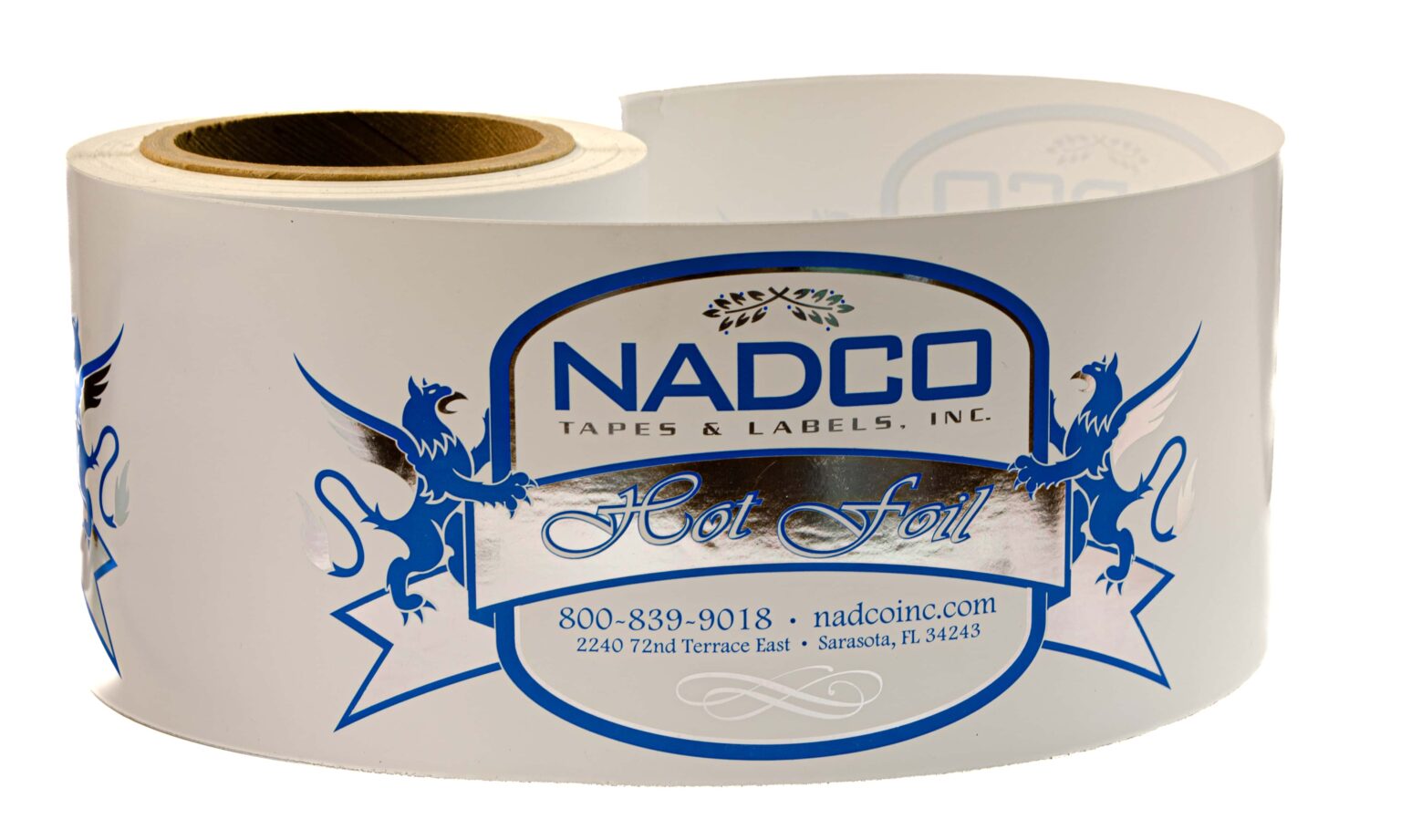
Hot Foil
With hot foil stamping, a die of the design to be foiled is mounted above the substrate and is then heated. The hot stamp foil, a metalized PET film with a heat activated adhesive, runs between the die and substrate. When pressure is applied from the die onto the material, the foil is fixed to the substrate’s surface. Because pressure is a main ingredient to hot foiling, the foil has dimension and a distinct feel.
Hot stamp foil delivers a luxuriously rich, raised look. Very fine lines and text can be incorporated into packaging designs, in many different colors and patterns. Hot stamp foil does not require a print station and may be used in conjunction with porous and
uncoated materials.
HOT FOILING
Better quality, brighter.
Hot foiling can be combined with embossing and stamping
to produce a tactile effect. Cold foiling can’t.
You don’t need an ultra-clean environment to hot foil; you do to cold foil.
You don’t experience problems with UV lamps which can be common during cold foiling.
COLD FOILING
Significantly cheaper. Adequate where very high quality isn’t a concern.
In-line foiling means it can be completed after or in between printing processes.
Much quicker process than hot foiling.
Cold foiling also has the appeal of being generally cheaper than hot foiling
which is why we offer both techniques.

Industries We Serve
Aerospace Industry
Aerospace Industry
The aerospace industry uses adhesive tapes to hold and insulate critical components under exposure to a wide variety of harsh conditions, including extreme temperatures, high moisture, fluctuating pressures, and UV radiation. To withstand the operational challenges posed by aerospace equipment, tapes must meet stringent standards and requirements for temperature resistance, flammability, low weight, and adhesion.
Automotive Industry
Automotive Industry
NADCO Tapes and Labels is a leading manufacturer of standard and custom tapes and pressure-sensitive labels. With our 35,000 square foot facility full of the latest manufacturing technology, we can create custom products for countless industries, including the automotive industry.
Contruction Industry
Contruction Industry
There are many applications for adhesive tapes on construction sites both within a structure’s interior and around the exterior, and many types of construction tapes exist that provide solutions for this industry.
Electronics Industry
Electronics Industry
Adhesive tapes are common in the electronics industry. While they’re typically used for insulation and other safety reasons, there are a number of specific applications that require different custom tapes. At NADCO, we’re proud to offer a wide range of materials and adhesive options that can be used for electronic products and applications, from masking and shielding to mounting and more. Over the years, we’ve worked with countless clients in the electronics space, and not only are we familiar with industry requirements and expectations, we’ve worked to create custom solutions for these companies.
Medical Industry
Medical Industry
Adhesive tapes used in the medical industry must meet strict medical-grade standards that often require customization. The tapes used in medical applications have the potential of being exposed to varying conditions, so they must have biocompatibility and be able to withstand intense environments.
Nuclear Industry
Nuclear Industry
At NADCO, we understand that each application is different, which is why we provide a wide range of nuclear tape and label designs, features, and customization options. We aim to enhance the safety of nuclear applications with quality adhesive solutions for every situation, from nuclear warning labels and RAD wipes to hazard tape and radioactivity indicator signage.
Personal Protective Equipment Industry
Personal Protective Equipment Industry
Personal protective equipment (PPE) is a broad term that refers to the equipment used to reduce your risk of injury or illness caused by exposure to germs and dangerous working conditions. Different types of PPE are required across various industries, depending upon the unique risks posed on the job site. These include face and eye protection as well as hard hats for the construction industry.
Safety Industry
Safety Industry
Safety is a crucial aspect of any work environment. Employees need a safe work environment, and customers must be able to access products and services without undue risk. In order to establish safe facilities, many companies incorporate safety tapes.

